
BLOG

02/Jan/2015

The cold and flu season is in full swing and you’re doing everything in your power to ward off pesky viruses but you still don’t feel 100%. You have been getting plenty of sleep, eating healthier, and received your annual flu shot. However, have you been exercising regularly? Recent studies have shown that moderate exercise can help boost your immune system.

Exercise: An Immune Booster

Your immune system is the body’s natural defense against infection. It helps fight viruses and diseases that you are exposed to regularly.  Exercising for 30 to 45 minutes a day can improve your chances of warding off viruses such as colds and may lower your risk of developing heart disease and certain types of cancer. According to the U.S. National Library of Medicine, exercising regularly can help to flush bacteria from the lungs.

For example, during moderate exercise, the body increases the amount of macrophages, which are the cells that attack bacteria, temporarily. During exercise, the body also circulates immune cells throughout your system more efficiently. After exercise, the immune system returns to normal, but habitual exercise may be able to make these changes long lasting.

Everything in Moderation

Working out at an intense level (such as marathon running or intense gym training) is okay from time to time, but is not recommended for daily practice.  Intense training may cause a decrease in the amount of white blood cells circulating in the body which in turn will make you more vulnerable to contracting a cold or virus. Remember, the body needs a period of time to recover from workout routines.

Exercising when you are sick is okay if your symptoms are mild, but pushing too much can be dangerous especially if your symptoms are more severe.  Be sure to always consult with your primary care provider to learn what level of activity is safe.

Let’s Get Moving

To improve you’re immune system and decrease your chances of getting sick it’s important to incorporate the right amount of exercise into your daily routine. Light to moderate exercise a few times a week can be useful, while intense workouts can be detrimental. Talk to your doctor about what level of physical activity is right for you, especially if you are feeling under the weather.

Now, let’s get moving!


24/Nov/2014

With the arrival of winter, most of us are guilty of allowing our workout routines to hibernate. Our specialists here at RWWC composed this list of tips on how to avoid that winter workout slump.

1.     Get a flu shot – The flu is a surefire way to immediately put your workout on the backburner. It is far worse than the common everyday winter’s cold and with symptoms such as fever, body aches, tiredness, and cough, you can almost guarantee you will throw off that perfect schedule you have been dedicated to the past few months. Once your routine has been sidetracked, we all know how hard it is to get back into your daily grind. If you are looking to keep your exercise routine on track this winter, get a flu shot so that you can avoid being out of commission for a week (or longer).

2.     Try something indoors – Winter is not an easy time to exercise outdoors. If you prefer to workout indoors during the winter try out that new DVD you have been eyeing up on Amazon, check out the class schedule at your local gym or the Bikram (Hot Yoga) class you have been putting off for the past few months. Trying something new and exciting that you enjoy will definitely keep you more motivated!

3.     Try something fun outdoors – Running outdoors during the winter can be a recipe for disaster if you are not accustomed to it. There are many winter activities that can torch those holiday calories quickly. Ice skating is notorious for burning major calories. One full hour of moderate ice skating can burn up to 500 calories! Why not bring your significant other with you to the new Dilworth Plaza Skating Rink for a fun night out on the town with the added benefits of exercise?! If you are more adventurous and like to go skiing or snowboarding, this can burn anywhere from 500-630 calories per hour and you will get to workout those muscles you often forget about.


It is no secret this summer is gearing up to be a hot one! After such a brutal winter, it is wonderful to finally be able to exercise outdoors. But with this comes added risks like dehydration, sunburn, or chafing. Here are a few common mistakes to prevent unhealthy or uncomfortable workout sessions.

1. Drinking coffee before a work out

Coffee can actually dehydrate you. Stick to water to hydrate pre-workout

2. Sleeping in

While it is tempting in the hot summer months to stay up a little later, since it stays light later, don’t let that keep you from your morning workout. Temperatures rise earlier in the day in the summer, putting off your workout, even by an hour, can cause overheating. Try to work out early or in the evening once the temperatures have fallen.

3. Wearing Dark or loose fitting clothing

Dark clothes absorb heat and put you at risk for overheating. While some people don’t like form fitting clothes or think tight clothes don’t allow for ventilation, loose clothes combined with sweat can make for some very uncomfortable workouts.

4. Not re-fueling post workout

Both water and food need to be replenished within 30 minutes of a workout session. When it’s hot, people tend not to want to eat big meals, but try something small and nutrient rich.

5. Not bringing water to a pool workout

Your body loses water during a pool workout just like it does on land and it is easy to forget that. Staying hydrated is just as important at the pool as anywhere else.

6. Only hydrating during your workout

It is very important to pre hydrate and post hydrate as well!

Enjoy the warm weather and summer freedom, but stay smart and healthy by not making these common mistakes. For more help with your personal fitness goals make an appointment to see a fitness specialist at RWWC today!


With the change in seasons come changes in the rest of our lives, including how our bodies feel. While some of us may feel fatigued or run down in this busy time, others may develop new aches and pains or exacerbations of old injuries. Pain can arise for a variety of reasons: whether it’s a new job requiring you to sit all day long, or a new hobby or sport that’s placing different demands on your body. The good news is that there are a lot of options that can help. Medications, exercise, yoga, meditation and acupuncture can all help to relieve pain and get you moving again.

Acupuncture is one of the best researched modalities in Complementary and Alternative Medicine. In 2012 a large review of studies on acupuncture for pain was published in the Annals of Internal Medicine. This review looked at nearly 18,000 patients with chronic pain syndromes such as back pain, neck pain, headaches, and shoulder pain. The results showed that acupuncture was superior to both sham (fake) acupuncture, and traditional treatment alone.

The even better news is that the side effects are minimal. The most common side effects are small amounts of bleeding after the needles are removed, and temporary itching at the location of the needles. While many people cringe at the thought of voluntarily being poked with needles, the reality is that most patients enjoy the treatments. The placement of the needles is relatively painless and it leaves people feeling calm, relaxed, and pain-free.

So how does acupuncture work to relieve pain? There are several answers to that question. Firstly, acupuncture treats the underlying conditions that predispose people to having pain in the first place. By accessing points of the affected meridian, the flow of qi, or energy, is optimized. Secondly, needles may be placed in tight or painful muscles to reduce spasm and muscle tension. Oftentimes, gentle electric stimulation or heat is used to increase the pain-relieving effects. Electroacupuncture, or acupuncture with electric stimulation, has been shown to increase the body’s production of natural pain-relieving chemicals. The overall effect is proper balance in the flow of energy, decreased tension in the muscles, and decreased pain.

Acupuncture is becoming more and more widely accepted as an effective modality for relieving pain. In fact, the United States military is a big supporter. Military medics are trained in acupuncture so they can quickly reduce an injured soldier’s pain on the battlefield until they can be transported to a medical center. But you don’t have to be a wounded veteran to benefit from acupuncture. At the Rittenhouse Women’s Wellness Center we provide acupuncture services to our patients at both locations.


In developing the Rittenhouse Women’s Wellness Center we wanted to create a Medical Home …a community exclusively for women where they could find a multidisciplinary team of women healthcare professionals who would understand them and be able to connect in a way that would help them improve their health and personal lives. We now support you, our community, (which has grown to over 12,000 women), with 9 board certified physicians along with 9 medical assistants, 6 psychologists, 2 registered dieticians, certified aestheticians and personal trainers.
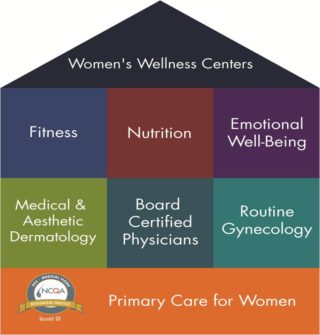
The other force driving the development of our centers was to give our total community, including our staff and those we serve, a safe, attentive environment where women could get the care they need and deserve for the complex lives they now live (that is, balancing work and family). So, we designed a work environment where we emphasize two features. First, that women should not be conflicted in their multiple roles, so there would be what is now a luxury in life, that is, time. Second, we have created a setting where women can feel supported and acknowledged for the difficulties they have in fulfilling their roles in healthful ways. We designed our practice as a place where there would be time to pay attention to details and time for a personal life and work. We want to provide these same elements to you, our patients, by giving you longer appointments than is customary in primary care and immediate access to our staff via email, phone and leaving time open for your urgent matters. It is in these ways that we are trying to create a sanctuary, where time temporarily slows down so that connection with yourself and expert others can allow effective healing to occur.

I feel honored to be part of such a venture and have a great commitment living up to the principles behind our centers. Although you won’t see me on site (I work behind the scenes to adhere to our women only environment), if you have questions or concerns please feel free to email me directly at rsaltzman@rwwc.com or when you come for your visit and want to meet me please request a time and I will gladly make myself available to meet with you.


A Note from RWWC

“Since our founding in 2008, our goal has been to provide primary care for women. Our team of physicians and nurse practitioners are dedicated to providing preventive care, diagnosis and treatment of acute and chronic disease(s) and coordination of care with specialists.”

Contact Us

Copyright by Rittenhouse Women's Wellness Center. All rights reserved.